Reading a Single Card in Position
The core method: four passes over one card, in a fixed order.
Everything else in this part of the course builds on this. The method is deliberately mechanical, and the reason is simple: it stops your first reaction becoming the whole reading.
Pass one: describe the picture
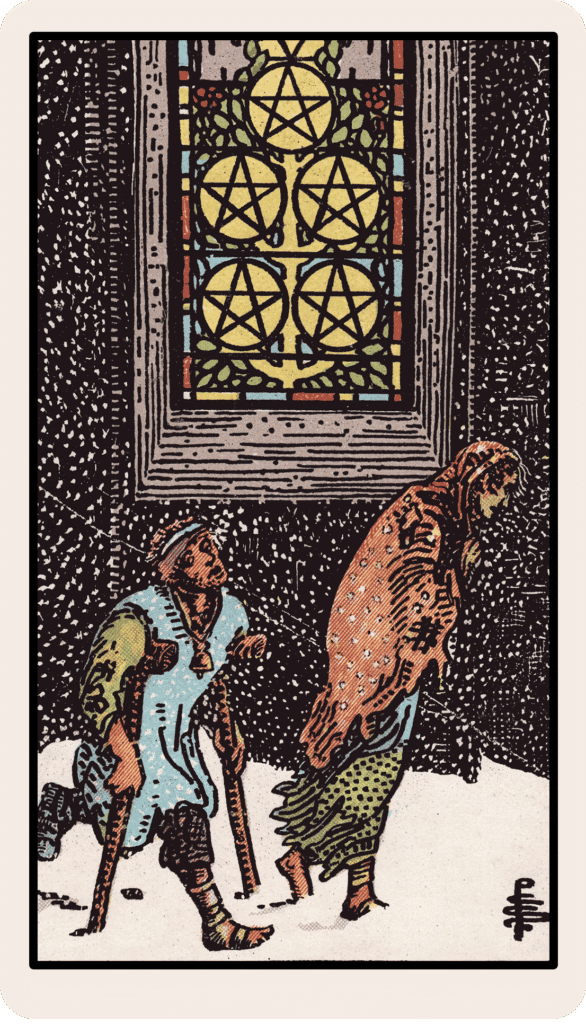
Before any meaning, say what is literally happening in the image. Who is there. What they are doing. Where they are looking. What the weather is.
Sounds trivial. It is the single most useful habit in card reading, because the details you notice today are not the ones you noticed last month, and the picture is the part that responds to your question.
Pass two: state the standard meaning
Now recall what the card conventionally means, including the part you find inconvenient. Most cards have a bright reading and a hard one. Hold both. Do not choose yet.
Pass three: bend it to the position
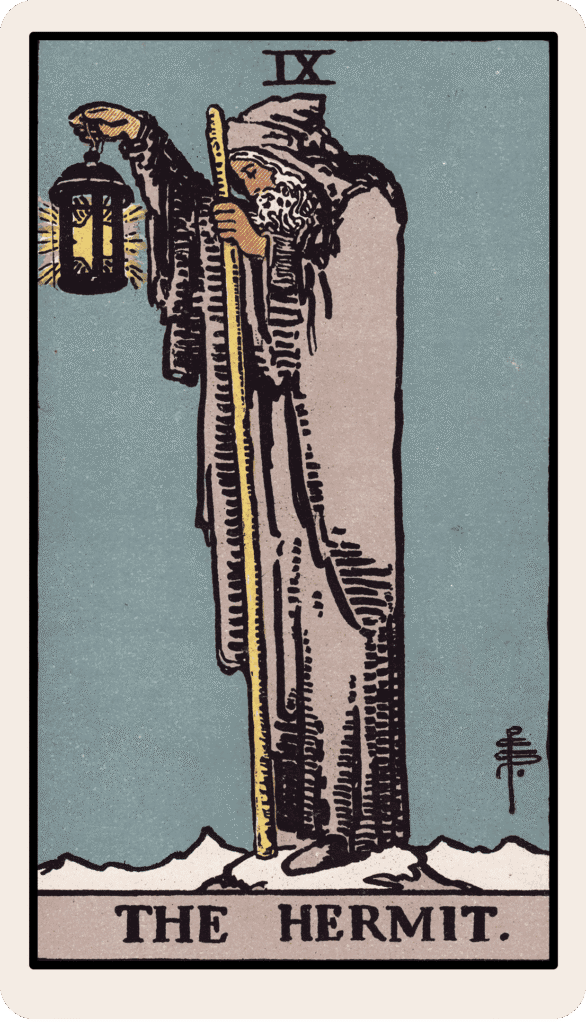
Ask the position’s question of the card. “Difficulty” and “advice” pull very different things out of the same image. The Hermit as a difficulty is isolation. The Hermit as advice is a deliberate withdrawal to think.
This is the pass beginners skip, and it is the one that makes a spread mean anything at all.
Pass four: apply it to the actual situation
Translate into the specifics of the question. Not “this card is about loss” but “what is being lost here is the assumption that they would fund the second year”.
Be concrete enough to be wrong. A reading you cannot be wrong about has not said anything.
Two ways it goes off
Stopping at pass two. Reciting the meaning is not reading. If your interpretation would fit any question at all, you are still on pass two.
Jumping to pass four. Going straight from the picture to your situation feels like intuition. This is where projection lives, and the two middle passes are the check on it.
Stuck on one card
Go back to pass one. Nearly every stuck reading turns out to be one where nobody actually looked at the picture.