What a Tarot Reading Actually Does
Seventy-eight pictures, and why they are useful whatever you believe.
Ask ten people what tarot is and you get two answers. It tells the future. Or it is a con with nice artwork. Sit down with a deck for an hour and neither one holds up.
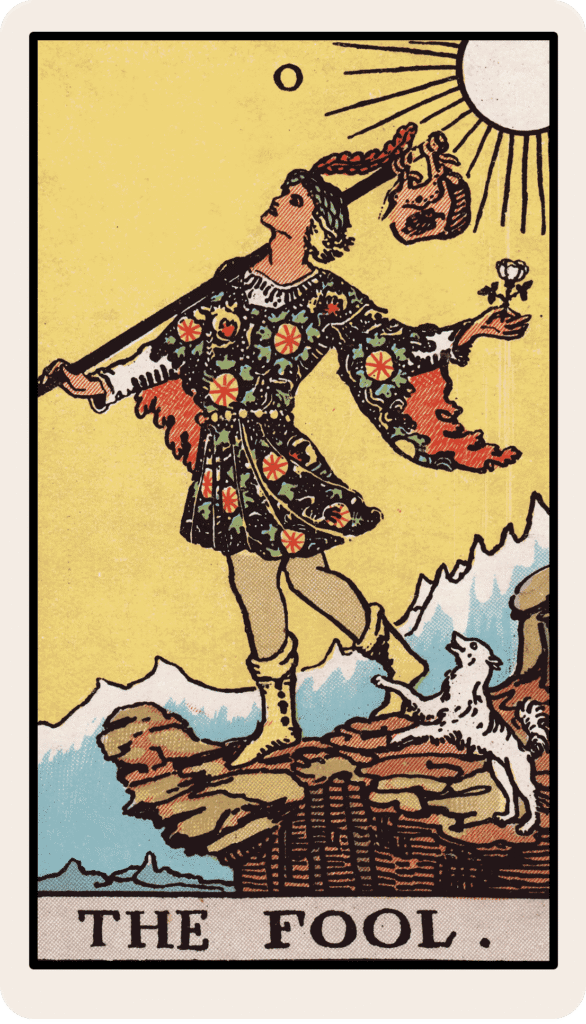
Here is what you are actually holding. Seventy-eight small pictures, each showing a situation people keep walking into. Someone at a fork in the road. Someone who has lost something and has not finished losing it. An offer that looks generous until you count it. Work that has finally started paying. You shuffle, you lay cards down, and you are handed images you did not pick and asked what they have to do with the thing on your mind.
That is harder to arrange than it sounds. Left alone, we think about our problems in the same worn groove every time. A card interrupts the groove.
Say you have been going round and round on whether to leave a job. Pull a card about waiting and the question changes shape. Pull one about walking away and it changes again. Sometimes you nod. Sometimes you find yourself arguing with a piece of cardboard, and the argument is the useful part, because you cannot argue without saying what you think.
What this course assumes
That you want to read, not just look things up. Memorising seventy-eight entries is the easy half. The hard half is holding four cards in your head at once and hearing what they say together, and no list of keywords teaches that. The lessons are ordered accordingly: the deck first, then how to ask, then how to read.
You do not have to believe anything in particular. Treat the cards as messages, as a mirror, or as a structured way of arguing with yourself. The method is the same in all three cases, and so is the result.