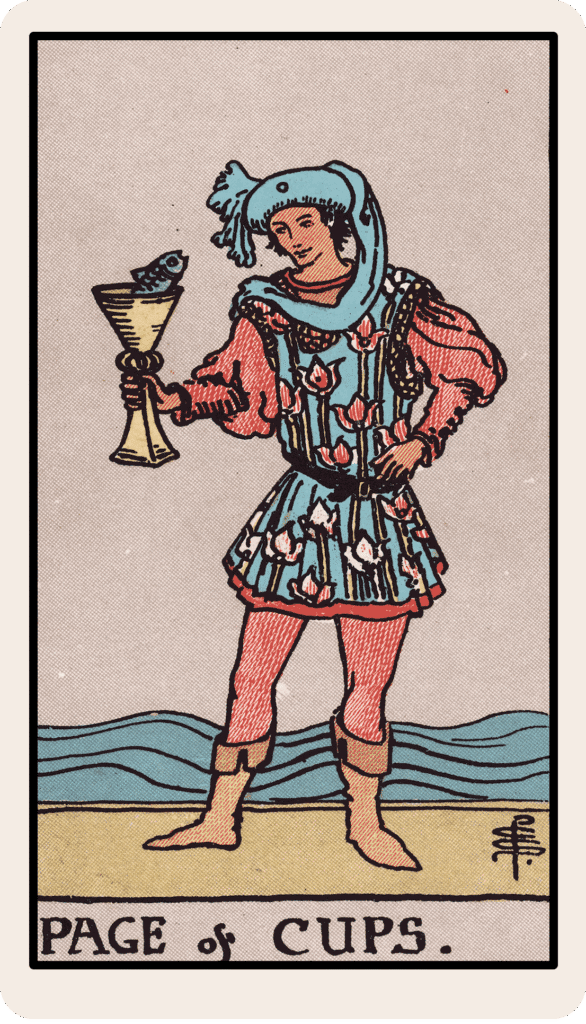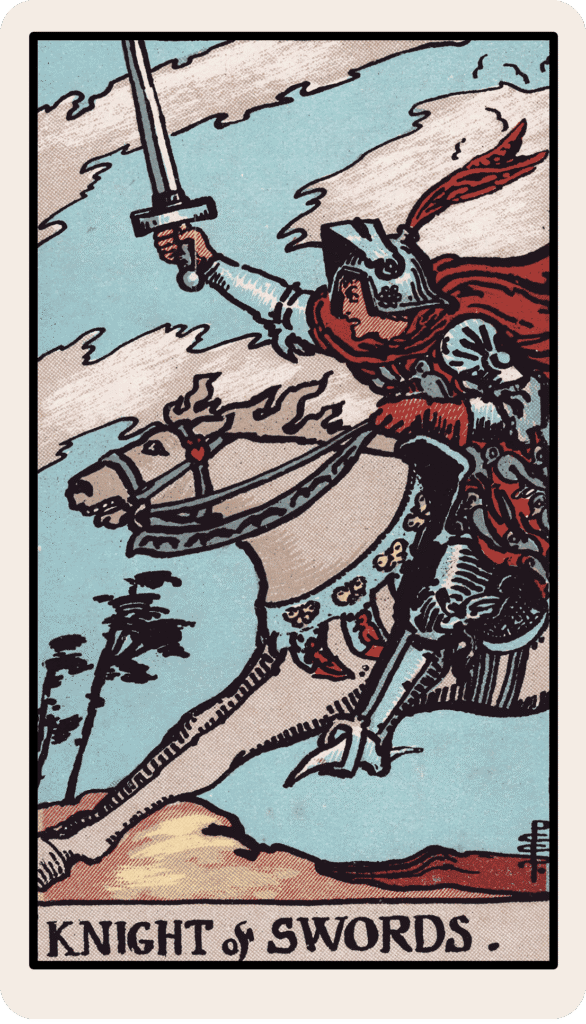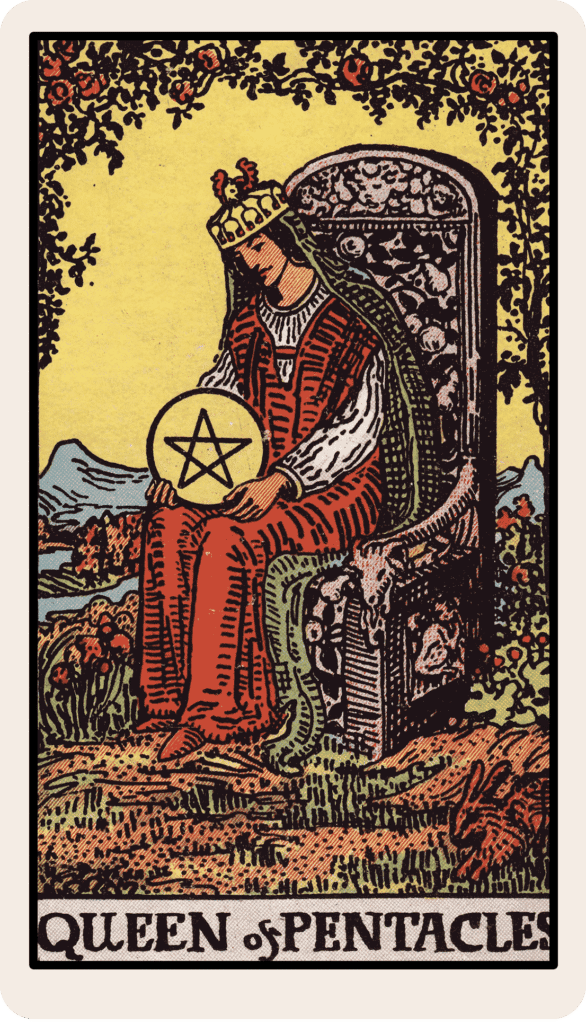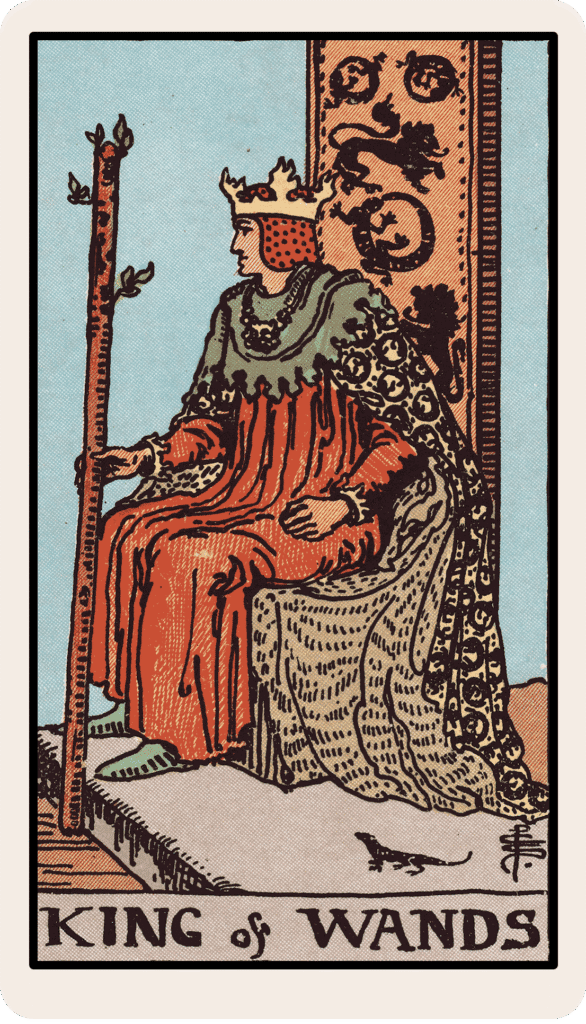
The Court Cards
Sixteen cards that can be a person, a mood, or a way of handling something.
This is where most people stall. Numbered cards describe situations, and situations are easy to work with. Courts describe people, and the spread almost never says which person.
Four ranks
- Pages — beginners. Curiosity, study, news arriving, somebody doing this for the first time.
- Knights — motion in one direction. Committed, quick, rarely balanced. A Knight is one quality turned up past where it works.
- Queens — mastery held inward. They understand the suit from inside and use it to steady other people.
- Kings — mastery turned outward. Authority in the suit, decisions taken, responsibility carried.
Put a rank against a suit and the card mostly writes itself. Knight of Swords: an argument moving at speed. Queen of Pentacles: the person who quietly keeps a household or a business upright and notices you have not eaten.
Three ways to read one
Somebody else. The most literal reading, and the first to try when other people are in the question. Rank and suit describe how that person operates. They say nothing about age or gender, whatever the picture looks like.
You. Very often the court card is the querent — either how they are acting or how they are being seen. This is the reading people push back on, and it is usually the one that lands.
An approach. When no person fits, read the card as advice about manner. King of Pentacles in an advice position is not a man in your life. It means handle this the way that kind of person would.
Choosing between them
Look at the company. Court cards among cards about events usually mean a person. Court cards among cards about inner states usually mean you. And if one shows up in a position that is explicitly about what to do, read it as an approach and stop hunting for a face.